Interesting reflections in this article from ValueWalk on how tourism-dependent economies are affected by this pandemic. Below we summarise and comment on the dark prospects that the author explains in this article.
.
Before the pandemic, the global tourism industry was a major contributor to the world economy, accounting for 10% of global GDP and more than 320 million jobs worldwide. But the pandemic has put at least 100 million jobs at risk, most of which are in micro, small and medium-sized tourism enterprises. That is 1 in 3 tourism-related jobs.
.
How have countries that are particularly dependent on tourism been affected by the pandemic?
These countries are likely to be affected by the pandemic for much longer than others that are not solely dependent on their tourist economy. The reason is simple and obvious. Contact-intensive services are part of the internal fabric of the tourism and travel sector, which unfortunately for tourism-dependent countries, had to be suspended due to the nature of the pandemic and will most likely continue until people feel safe to travel en masse again. There is no way to do tourism without personal, physical contact. And the virtual tourism that has emerged, via visits with professional guides who live-stream their tours via zoom and the like, is not and will not be a meaningful substitute or palliative for economic disaster.
.
In the first half of 2020, global travel and tourism fell by almost 80% and lost US$1.2 billion in revenue. The consequences for tourism-dependent countries, including several African countries, countries in the Caribbean, the Mediterranean and some Pacific Island nations, are severe, as their economies and GDP continue to shrink as the pandemic unfolds.
.
How do tourism-dependent countries plan to recover?
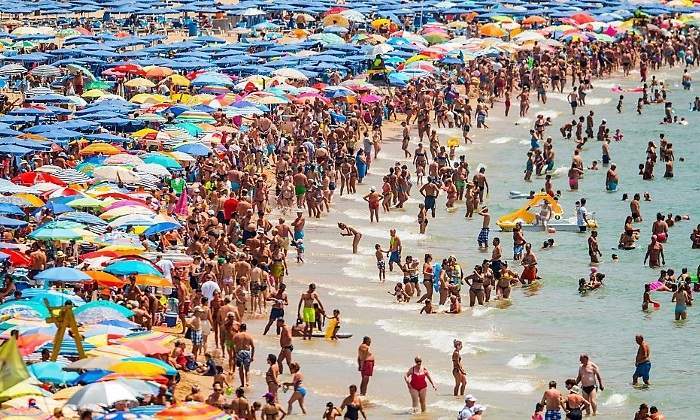
A number of tourism-dependent countries are trying to finance various policy measures to mitigate the effects of plummeting tourism revenues on households and businesses. Cash transfers, subsidies, tax breaks and loan guarantees have been part of these government policy measures. However, in countries such as Spain, which is used to receiving 84 million foreigners each year, such measures are clearly proving insufficient and ineffective.
.
Other tourism-dependent countries have opted for very specific approaches. The Seychelles, for example, benefited from an increase in tuna exports during the pandemic to compensate for tourism losses, while in Barbados the government is seeking to reduce social spending and reprioritise capital spending to create jobs in non-tourism sectors. Small economies, if their rulers are nimble and imaginative, can make decisions that have a substantial offsetting effect.
.
With the slow lifting of global travel restrictions, many tourism-dependent countries have also begun to reopen their borders. Some have drafted and approved very specific travel admission programmes that would admit tourists from low-risk countries with special quarantine requirements or allow admission on condition that tourists can provide proof of a negative COVID-19 test. However, others such as Spain cannot do so because their levels of contagion and ICU bed occupancy and daily deaths do not allow it.
.
What will happen to hidden tourist destinations?
While many tourism-dependent countries are implementing recovery strategies to boost travel and tourism, there are many tourist destinations, with somewhat more diversified economies due to their larger size such as Spain, that need tourism to survive the pandemic.
.
There are hidden parts of Europe where tourism is also key and represents between 10% and 15% of their GDP, for example Spain or Croatia. Or even more, such as in the Fiji Islands or others in the Asia-Pacific region.
.
Destinations such as Fiji for example are isolated tourist destinations that did not experience an influx of tourists on a regular basis even before the pandemic. However, now, given people's hesitancy to travel to popular holiday destinations, these destinations may be the perfect places for people to go now that countries are lifting travel restrictions.
.
What is the future for tourism-dependent countries like Spain?
It is very difficult to predict the future of the tourism industry and how tourism-dependent countries will fare during and after the pandemic. But slowly, with countries lifting travel restrictions and opening their borders, tourism-dependent countries may recover after the pandemic, but with so many people still hesitant about mass travel, such as flying, it is likely that global tourism will not return to pre-pandemic levels in the near future. And when it does return, the Hunger Games will decide which countries get the biggest slice of the sector's comeback, since tourism distribution need not return to the same countries - far from it. The key question is whether or not the economic damage caused in countries such as Spain will be reversible before the next generation is spoiled. And the macro data we explain in «We must plan for misery»The «tourism crisis" does not bode well for the optimism of our children. Our governments, present and future, will have much to say in the potential recovery and exploitation of tourism. But, as we warned in "The sinister future of our children in Spain»Parents must also make it easier for our children to make a living in less hostile economic environments.
It is regrettable to see the differences in the handling of the emergency situation in the coronavirus pandemic between different countries around the world. But what is worrying is the attitude of the Spanish political and health authorities in the face of this crisis, as they strive time and again to distort the facts and data in order to minimise its stark reality. A mixture of cowardice and misunderstood paternalism that justifies, in the eyes of some, the absence of courageous decisions. The Spanish authorities' determination to deceive the public stands in sad contrast to the realistic and serious warnings of other governments and global health organisations.
.
La propia Ministra Portavoz del Gobierno Maria Jesús Montero ha declarado en distintos medios de comunicación, y sin ningún rubor, que el Covid-19 no es más que una «nueva gripe, parecida a la gripe habitual y con un porcentaje de mortalidad incluso más bajo que el de la gripe normal» (for example in minute 10 of the following interview with him on RAC1 last week).
.
.
La lamentable realidad es que la mortaldad de este virus es muy superior al de la gripe estacional. Y cualquier científico bien informado, cuyo rigor no se vea contaminado por las consignas políticas del gobierno, admitirá cifras estadísticas entorno a 3 o 4 fallecimientos por cada 100 infectados. Algunas autoridades españolas manejan cifras de mortalidad de gripe normal del 2%, pero respecto a ingresados en hospitales y no respecto a infectados, inflando así la tasa de mortalidad y haciéndola incomparable con la del Covid-19. Por otro lado, también maliciosamente, proclaman que la mortalidad del coronavirus es del 0,7%, tomando las cifras de muertes resepecto a infectados justo al inicio de la epidemia en Europa, con lo cual los enfermos que van a morir todavía no lo han hecho. Para dejar aún más en evidencia a la ministra, ahí va la comparativa oficial entre la tasa de mortalidad de la gripe común y el Covid-19 dela CDC norteamericano:
.Las cifras con mayor fiabilidad estadística las encontramos en China, donde hay mayor número de casos de coronavirus y más antiguos. Y esas cifras están hoy en el 3,75% mortality3012 deaths out of 80409 infected. Unfortunately, a fraction of those infected today will also die, while the number of new infections is already declining, so that this percentage is also tending to increase by about 0.04% per day, as it has done in the last few days. In other words, if the official figures in China are to be believed, mortality is indeed frighteningly close to 4%. And if we don't believe the official figures (I personally do) and think that the Chinese government is making up the mortality, then that's the end of the story. You can follow the daily evolution of the official figures in China at this page from Wikipedia, and the official figures for the rest of the world at this one.
.
However, some news which many people dismiss as being tremendist, infodemic or fake news, are in line with what is published in the majority of the world's media. international media with up-to-the-minute timelines of any new developments regarding the coronavirus,and spare no means or adjectives to keep the people of their respective countries on alert and on the lookout for health emergency. Because this state of alert and emergency does indeed punish the economy in the short term, but it saves lives. Thus, countries such as the US, where the spread of the virus is currently still proportionally lower than in Spain, are giving unequivocal instructions to their citizens to be prepared for imminent confinement o emergency situation This is because, mortality rate aside, what is clear is that this coronavirus is highly contagious, and its spread across the planet is unstoppable. Mortality rates aside, what is very clear is that this coronavirus is highly contagious, and its spread across the planet is unstoppable. That is why responsible governments are alerting and preparing their citizens for a massive infection. According to the calculations of Harvard Professor of Epidemiology Marc Lipsitch, entre un 20 y un 60% de la población mundial se va a infectar del coronavirus si no tomamos medidas drásticas como ha hecho China y/o no surge un fármaco eficaz y viable para todo el mundo. Y a la espera de ese fármaco, nuestra única opción es ralentizar la pandemia. Eso supone, aún con tasas de mortalidad optimistas, millones y millones de muertes en todo el planeta, con un coste a todos los niveles brutal. Qué contraste con las declaraciones happy flowers de nuestros ministros y portavoces sanitarios que siguen hablando de «nueva gripe que mata menos que la gripe normal», verdad?
.
.
It is undeniable that a realistic warning about what is coming makes the population radically modify its usual activity, and with it consumption, productivity and therefore the economy plummets, as has happened in China. But courageous (albeit belated) measures, such as those taken and implemented with martial rigour by Xi Jinping, will save his country's economy in the medium and long term. Because an uncontrolled epidemic, with the mortality rate that this coronavirus entails, would have a far greater impact on the economy in the medium term than the short-term slump. Economically we could see a V-shaped economic downturn and recovery, but without bold measures by the already growth-anemic developed economies, we in the West will not even see a U-shaped recovery.
.
In Italy, the epidemic is just a few weeks ahead of us, and yesterday the decision was taken,The government's decision to close all schools and universities in the country, albeit belatedly, was a belated one. In Spain, on the other hand, despite recognise at least 3 infections in children school-age children, the closure of schools is not (yet) being considered. Not only that, but in one case it was the mother who insisted time and time again that her daughter be tested for the coronavirus, while the health authorities kept telling her to find a family member (as both parents had to stay at home because they were infected) to take her to school normally! What a botched job we are doing on such a serious issue in which we all have so much at stake! Because the fact that the vast majority of children and young people overcome the infection with mild or even asymptomatic symptoms does not in any way prevent these children and young people from infecting their parents, grandparents and teachers. These are all groups that will suffer serious consequences and whose mortality is very high, as we have seen above. Moreover, it is absurd to try to contain the epidemic by keeping infected parents at home and letting their children, who are also infected but many of them do not know it, move freely in the streets, buses and other environments with which they usually interact.
.
Otro ejemplo: En España las autoridades se han esforzado lo indecible para recalcar que los contagios existentes no eran comunitarios (contagiados locales) sino importados, de Italia, China, etc. Remarcaban insistentemente que eso era un detalle importantísimo, tratando de convencer a la población de que España estaba en una situación perfectamente controlada puesto que nuestros contagios eran todos importados, obviando que solo es cuestión de tiempo que se produzcan, como así ha sido, contagios comunitarios en España. No obstante, ante contagios cuyo origen no es importado, las autoridades españolas aún los califican como de «orígen desconocido», sin reconocer aún que son contagios ya comunitarios, es decir locales.
.
On the other hand, in the United Kingdom, despite having fewer people infected than in Spain today, there are already clearly warn The population should be made aware that community infections are an imminent reality and that the population needs to be aware of this in order to be better prepared.
.
Even in the American universities clearly warns that if students take advantage of spring break (similar to Easter holidays in Spain) to leave the country or visit areas with a high incidence of the virus, they will have problems to be readmitted back, unless they stay in the country for the rest of the year. two-week quarantine en una localización apta antes de volver a sus habitaciones del campus. Vamos, igualito que aquí…
.
The situation is very serious, because unless a medication emerges within a few days that drastically reduces mortality and is feasible for mass administration, what is happening in Italy will only be the tip of the iceberg in the rest of Europe. And neither the health services (already overstretched in Italy) nor the logistics of essential supplies will be able to cope with a massive contagion. That is why it is vital to take courageous measures of blockade and isolation as China has done, even if it means a short-term economic collapse. However, the first decision the EU took was to take the option of closing intra-European borders off the table, thus paving the way for the free movement of Europeans and Covid-19 from Lisbon to Berlin. Yes, those same intra-European borders they did not hesitate to close instead, unilaterally suspending the agreement on Schengen, The refugees were arriving by the millions in the heart of Germany.
.
La paradoja a la que se enfrentará ahora China es que deberá seguir cerrando sus fronteras (a personas, que no a mercancías) para evitar que, una vez controlada su epidemia doméstica, no les infecte de nuevo el virus, procedente ahora de países como los europeos donde la infección estará descontrolada por culpa de decisiones políticas tardías y cobardes. Por ello veremos antes la recuperación del valiente gigante asiático que la de la vieja y cobarde Europa, lo cual supone una oportunidad de inversión extraordinaria, como ya avanzamos en «Realistic coronavirus figures and the opportunities of an unfortunate crisis«. China comienza su senda back to business. And it does so having acquired a priceless technological know-how to handle the next health crises, as we can read in this WeekInChina article.
.
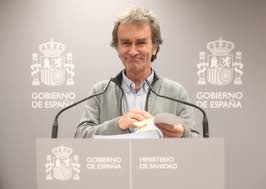
In short, the handling of information and alerts to the public say a lot about each country. And unfortunately in Spain we have authorities who are more concerned with bread for today than with deaths and hunger for tomorrow. They focus the State's communication efforts on keeping the population in the dark, who consequently live without any foresight in the face of a health emergency, i.e. without stockpiling food and medicines or any family or personal contingency plan whatsoever. Even the Director of the Alerts and Emergencies Coordination Centre, Fernando Simon, ha llegado a decir que ir con mascarilla por la calle es contraproducente porque la gente se reiría de nosotros o creerían que estamos infectados, insistiendo una y otra vez en que las mascarillas no nos protegen ante la infección de ninguna manera. Y a continuación admitiendo con la boca pequeña que si la población compra mascarillas, los profesionales sanitarios no tendrán suficientes, evidenciando que son un elemento de protección eficiente y necesario. Recordemos que en países como China son compulsory masks for the entire population in risk areas and punish those who go out on the streets without them. Other governments, such as the French or German directly confiscate or prohibit the export of facemasks so that their health professionals can have them, without treating their citizens as imbeciles by telling them that they are no protection against infection and that they will make fools of themselves if they put one on.
.
It is true that some young and healthy readers may dismiss this article as being tremendist, but they should bear in mind that although they would overcome the infection with hardly any symptoms, they would probably fatally infect other less healthy and younger people in their family and professional environment, or simply strangers with whom they share, for example, a simple public transport. In the end, it is better to continue informing ourselves in international media and preparing ourselves for the worst, while we cross our fingers that we will soon have a medication available to everyone that will reduce the real mortality rate to the levels of a simple flu.
A la mayoría de padres les sorprende saber que si quieren que sus hijos puedan estudiar en una Universidad norteamericana deben iniciar el proceso un par de años antes de terminar el bachillerato. Por eso, en muchos casos, cuando toman la decisión familiar de sondear las posibilidades de sus hijos para estudiar en el mejor sistema universitario del planeta, es ya demasiado tarde. El timing correcto es comenzar el proceso en estas fechas, cuando han finalizado el 4º de ESO o a principios de 1º de bachillerato. De ese modo se puede aprovechar el verano y el curso para realizar alguna actividad extraescolar que mejore sustancialmente su expediente y CV de cara al proceso de aplicación universitario. Sí, es cierto que también se puede comenzar el camino hacia universidad americana a finales del curso de 1º de bachillerato, pero si lo hacemos entonces todos los pasos se deberán dar con mayores prisas, lo cual va a ser más estresante, y sobre todo va a permitirnos menos intentos para conseguir buenas calificaciones en los distintos exámenes que se deben realizar en los centros oficiales designados en diversas ciudades españolas. No obstante, incluso ya en 2º de bachillerato hemos conseguido realizar aplicaciones express, aunque lo suyo es aplicar para el año posterior, aprovechando uno o dos semestres sabáticos para mejorar el inglés o asistir como oyente a alguna universidad española sin ninguna presión.
Sorprende a la mayoría de familias saber que no es necesario que las notas sean excelentes, aunque lógicamente eso ayuda a acceder a mejores universidades, pero cuañquier alumno con un promedio de 6 tiene también sus opciones si se esfuerza en los exámenes de acceso. También sorprende a muchos padres saber que los costes pueden ser mucho más asequibles de lo que creían, y muy parecidos a los que tendría cualquier familia que envíe a sus hijos a estudiar a una universidad privada de cualquier ciudad española o europea. A continuación os copiamos los costes anuales que publicamos en nuestro anterior artículo: «¿Puedo enviar a mis hijos a estudiar a una Universidad en los EE.UU.?«. Como veréis, existen excelentes opciones de universidades con costes equivalentes a las privadas españolas. Además, hay posibles de becas y ayudas que reducen sustancialmente los costes, especialmente de las más caras, en función lógicamente de los méritos académicos del alumno/a y las necesidades económicas familiares. Los siguientes costes anuales son brutos, es decir que habría que deducirles posibles becas y ayudas:
Coste de matrícula:
Entre 10 y 55 mil € dependiendo del prestigio y calidad de la universidad.
Coste de habitación y comidas:
Entre 8 y 15 mil €
Libros, material, viajes y gastos varios:
Entre 2 y 3 mil €
Seguro médico para estudiantes internacionales:
Entre mil y 2 mil €
El proceso para ser admitidos en Universidades de USA es largo y complejo para los alumnos y para toda la familia, y puede resultar muy estresante. Por ello, las probabilidades de éxito sin el asesoramiento y acompañamiento de la mano de consultores y coaches profesionales, son escasas. Como ya dijimos en el citado artículo, desde Cluster Family Office, hace ya varios años que estamos ayudando a muchas familias a cumplir su sueño americano. Nuestro servicio de asesoramiento incluye todo el proceso de principio a fin, desde que el candidato/a está finalizando la ESO hasta prácticamente la puerta del avión que le llevará a iniciar su andadura en las universidades de USA que mejor se adapten al potencial académico y económico de cada caso. Les asesoramos y acompañamos en todo el proceso incluyendo la elección de una lista de universidades a aplicar, los Essays, las cartas de recomendación, las solicitudes de becas, el visado, la residencia y demás logística familiar, etc. En esa lista definitiva de entre 8 y 12 universidades a las que aplica cada candidato/a, incluiremos 3 o 4 Universidades que se ajusten a sus necesidades y donde es prácticamente seguro que será admitido; otras 3 o 4 en las que tendrá ciertas posibilidades; y finalmente 3 o 4 más en las que las probabilidades de acceso serán escasas (las que solemos calificar como la carta a los reyes magos), pero que en algunas ocasiones puede sonar la flauta y acabar siendo admitido/a en una Universidad de ensueño, a pesar de que su porcentaje de aceptación sea muy bajo.
La principal diferencia entre las Universidades norteamericanas y las españolas son evidentemente los recursos económicos de los que disponen en EE.UU. Dichos recursos millonarios se convierten en instalaciones espectaculares, profesorados prestigiosísimos, presupuestos disponibles para trabajos de investigación tanto a nivel de postgraduados como de alumnos recién llegados, residencias y comedores estudiantiles de primera, y en difinitiva dinero para que los estudiantes den de sí infinitamente más, tanto a nivel académico como personal. Las grandes universidades públicas y privadas norteamericanas son como auténticas ciudades, con equipamientos espectaculares para practicar todo tipo de deportes, estadios mayores que los de muchso clubes de futbol españoles de primera división, tiendas, bancos, cines, teatros y hasta con policía propia de la universidad. Todo ello dentro del campus universitario. Con estos equipamientos, a nadie se le escapa que la vida estudiantil de un alumno que se queda en universidades españolas es radicalmente distinta a las vivencias durante los años de universidad en los USA.
.
A continuación os dejamos unos enlaces para que os hagáis una idea de los apartamentos, habitaciones, instalaciones y del ambiente que se vive en las familias que han pasado por ese proceso y reciben la noticia de la admisión final a la universidad de sus sueños. Y al final de «Estudiar en universidad en USA» encontraréis también diversos videos de lo que significa verdaderamente la vida univesitaria en Estados Unidos.
.
Podéis pedirnos una entrevista en Madrid o Barcelona sin compromiso para valorar las posibilidades de vuestros hijos a través de info@clusterfamilyoffice.com



 Otro ejemplo: En España las autoridades se han esforzado lo indecible para recalcar que los contagios existentes no eran comunitarios (contagiados locales) sino importados, de Italia, China, etc. Remarcaban insistentemente que eso era un detalle importantísimo, tratando de convencer a la población de que España estaba en una situación perfectamente controlada puesto que nuestros contagios eran todos importados, obviando que solo es cuestión de tiempo que se produzcan, como así ha sido, contagios comunitarios en España. No obstante, ante contagios cuyo origen no es importado, las autoridades españolas aún los califican como de «orígen desconocido», sin reconocer aún que son contagios ya comunitarios, es decir locales.


